Crystal Dreams

Blog

Your blog category

Crystal Care Mistakes That Can Damage Your Stones
Blog

Crystal Care Mistakes That Can Damage Your Stones

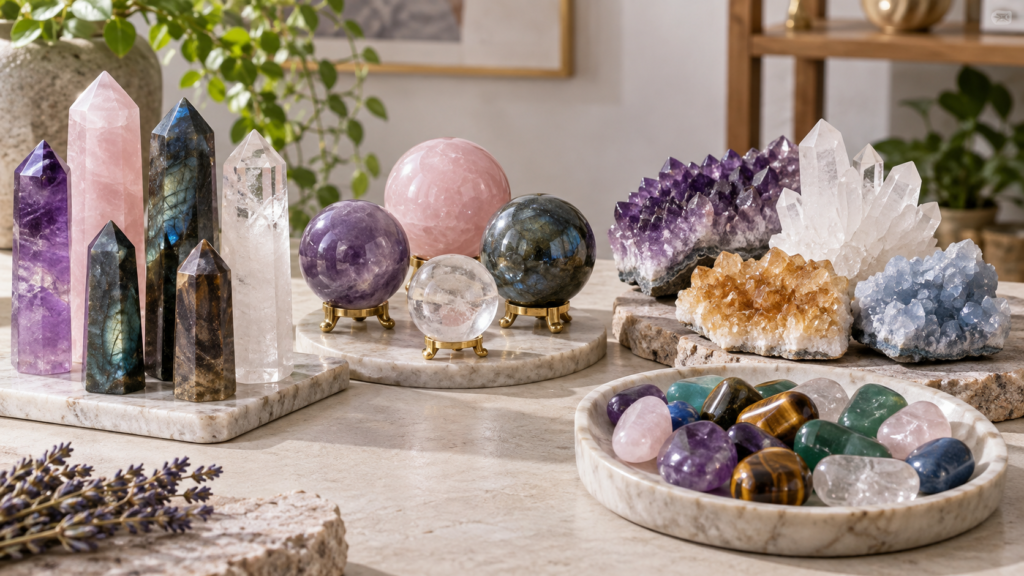
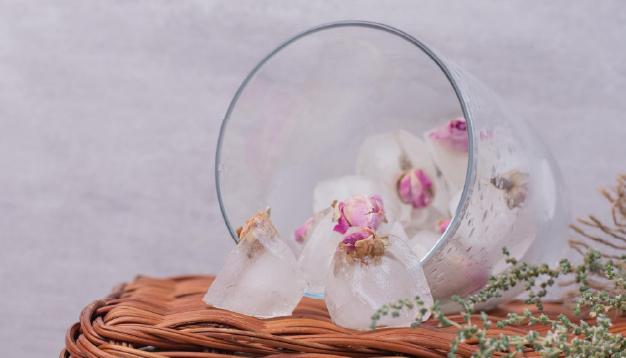
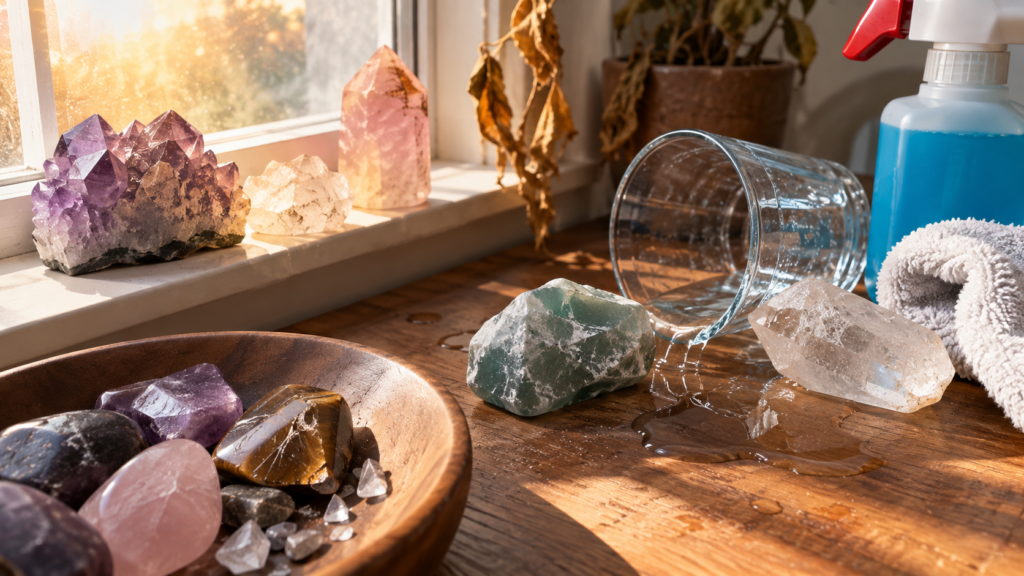
    Crystals are natural minerals that can last for generations when they are handled and stored properly. However, many crystal owners unknowingly make mistakes that can affect the appearance, condition, and longevity of their stones. A crystal may become faded, scratched, chipped, cracked, or damaged because of something as simple as placing it in direct sunlight, cleaning it incorrectly, storing it with harder minerals, or exposing it to unsuitable conditions. Understanding proper crystal care is not about complicated routines. It is mainly about knowing that different minerals have different physical properties. Some crystals are durable and suitable for everyday handling, while others are softer, more fragile, or sensitive to environmental factors. This guide explains the most common crystal care mistakes and how to avoid them so your collection stays beautiful for years. Why Proper Crystal Care Matters Every crystal is formed differently depending on its mineral composition and structure. Factors that influence durability include: Mineral hardness Crystal structure Cleavage patterns Porosity Surface treatments Shape and formation For example, a smooth tumbled stone may handle daily use better than a delicate natural cluster with thin points. Proper care helps protect: Color Surface finish Natural formations Polished appearance Collector value Overall condition Mistake 1: Leaving Crystals in Direct Sunlight for Too Long One of the most common crystal care mistakes is placing stones where they receive constant direct sunlight. Sunlight can affect some crystals over time, especially those with colors that are sensitive to prolonged UV exposure. Why Sunlight Can Be a Problem Extended sunlight exposure may cause: Fading colors Changes in appearance Surface heating Damage to certain treated stones A crystal displayed near a sunny window may look beautiful initially, but months of strong sunlight can gradually affect some minerals. Crystals That May Need Extra Sunlight Protection Some crystals that owners often protect from prolonged sunlight include: Amethyst Fluorite Rose Quartz Celestite Some dyed or treated stones This does not mean these crystals can never see sunlight. The concern is long-term exposure. Better Display Options Instead of placing sensitive crystals directly in a sunny window: Consider: Shelves away from direct rays Display cabinets Shaded areas Rotating display locations A beautiful crystal does not need constant sunlight to be appreciated. Mistake 2: Assuming Every Crystal Can Be Cleaned the Same Way A common mistake is using the same cleaning method for every crystal. Different minerals have different properties. Some tolerate water well, while others may be affected by: Moisture Chemicals Temperature changes Scrubbing A cleaning method that works for one mineral may damage another. Mistake 3: Soaking Sensitive Crystals in Water Many people assume water is the safest way to clean crystals. However, some minerals can be sensitive to moisture. Potential issues include: Surface damage Weakening of structures Changes caused by water exposure Damage to porous materials This is especially important for: Soft minerals Porous stones Crystals with natural fractures Treated crystals Safer Cleaning Methods Depending on the mineral, safer options may include: Soft microfiber cloth Gentle dusting brush Dry cleaning methods Limited moisture when appropriate Before using water, research the specific mineral first. For additional information about gemstone properties, the Gemological Institute of America Gem Encyclopedia provides educational information about gemstone characteristics and physical properties. Mistake 4: Using Harsh Chemicals on Crystals Household cleaners may seem convenient, but they can damage crystal surfaces. Avoid exposing crystals unnecessarily to: Bleach Strong detergents Acidic cleaners Abrasive chemicals Chemical exposure can affect: Surface shine Coatings Polishing Color appearance This is especially important for decorative crystals and treated stones. Mistake 5: Storing Crystals Together Without Protection A crystal collection may look organized in one box, but storing everything together can create problems. Different minerals have different hardness levels. A harder crystal can scratch a softer one when pieces move against each other. Better Crystal Storage Methods Consider: Separate compartments Soft pouches Individual wrapping Display trays Divided storage boxes This is especially important for: Polished stones Jewelry pieces Fragile specimens Collector crystals Mistake 6: Ignoring Crystal Hardness Not all crystals are equally durable. The Mohs hardness scale is commonly used to compare how resistant minerals are to scratching. A harder mineral can scratch a softer mineral when stored or carried together. For example: A hard Quartz crystal may damage a softer mineral if they constantly rub against each other. Understanding basic mineral properties helps you decide: Which stones can travel together Which require separate storage Which are suitable for daily handling Mistake 7: Carrying Fragile Crystals Without Protection Many people enjoy carrying crystals in pockets or bags. However, some crystal forms are not designed for rough movement. Risks include: Chips Broken points Surface scratches Cracks This is especially true for: Raw crystals Thin points Clusters Delicate formations Better Carrying Practices For everyday carrying, consider: Smooth tumbled stones Palm stones Protective pouches Separate compartments For more information about choosing practical crystal forms, read: Crystal Towers, Spheres, Clusters & Tumbled Stones: Which Form Should You Buy? Mistake 8: Placing Heavy Crystals in Unsafe Locations Large crystals can be beautiful display pieces, but their weight should not be ignored. A heavy crystal placed incorrectly can damage: Furniture Shelves Flooring The crystal itself Check Before Displaying Large Crystals Consider: Shelf strength Surface stability Distance from edges Protection from accidental knocks Large spheres, clusters, and towers should always have a secure placement. Mistake 9: Dropping Crystals or Handling Them Roughly Although crystals are minerals, they are not indestructible. Impact can cause: Chips Fractures Broken points Surface damage Natural formations are often more vulnerable because they contain delicate structures. Handle collector specimens carefully, especially: Clusters Raw crystals Large points Thin formations Mistake 10: Cleaning Crystal Jewelry Incorrectly Crystal jewelry requires additional care because it combines minerals with other materials. A bracelet or necklace may include: Elastic Metal parts Clasps Coatings Polished beads Incorrect cleaning can damage more than just the crystal. Crystal Jewelry Care Tips Avoid: Wearing jewelry during harsh activities Exposing it to chemicals Storing it loosely with other jewelry Pulling elastic unnecessarily For bracelet-specific buying and care information,
How to Store Crystals Safely
Blog

How to Store Crystals Safely: A Practical Guide to Prevent Scratches, Fading & Damage

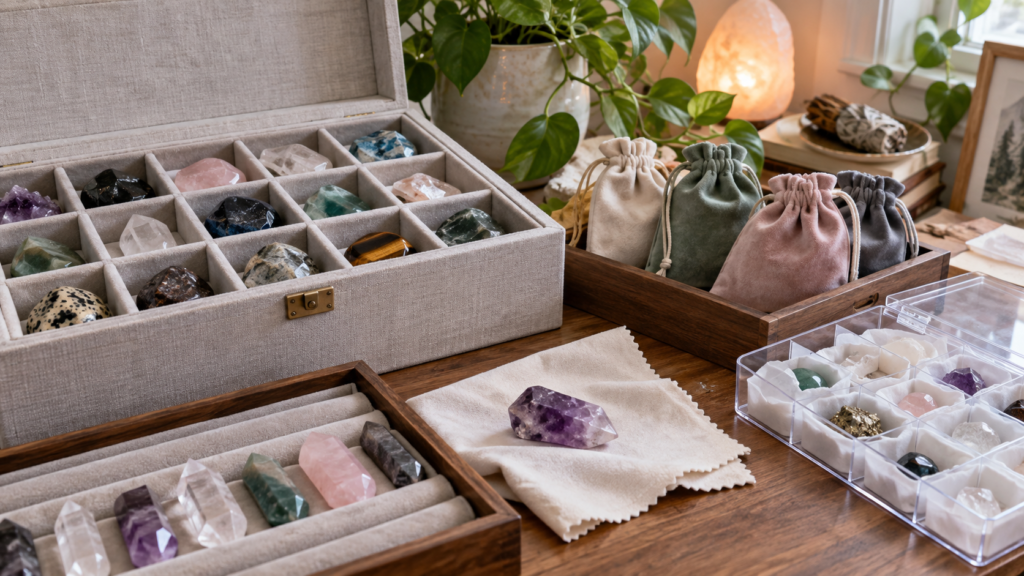
    Building a crystal collection can be an exciting journey, but many people focus only on choosing beautiful stones and forget about one important part: proper storage. Crystals are natural minerals, and while many are durable, they are not indestructible. Incorrect storage can lead to: Scratches Chips Broken points Faded colors Dust buildup Surface damage Damaged jewelry pieces A good storage system helps protect your crystals while keeping them organized and easy to enjoy. Whether you own a few small tumbled stones or a large collection of towers, clusters, jewelry, and collector specimens, understanding how to store crystals safely will help maintain their appearance and condition for years. Why Crystal Storage Matters Every crystal has different physical characteristics. Some minerals are: Hard and durable Soft and delicate Sensitive to sunlight Easily scratched Fragile because of natural formations For example, a smooth polished stone may handle everyday storage better than a delicate raw cluster with thin crystal points. Proper storage helps protect: Natural formations Polished surfaces Crystal color Jewelry components Collector value Overall appearance A good storage method is not about making your collection look complicated. It is about preventing avoidable damage. Understand Your Crystals Before Storing Them Before deciding where to keep your crystals, understand what types of pieces you own. Different forms require different storage approaches. Common crystal forms include: Tumbled stones Palm stones Towers Spheres Clusters Raw specimens Crystal jewelry Carved pieces A small tumbled stone and a large natural cluster should not be stored the same way. Store Crystals Separately to Prevent Scratches One of the biggest crystal storage mistakes is keeping all stones together in one container. Although this may look convenient, crystals can scratch each other when they move around. The risk increases when: Harder minerals rub against softer ones Sharp points touch polished surfaces Heavy specimens press against smaller stones Use Individual Storage Compartments Better options include: Divided storage boxes Small containers Jewelry organizers Fabric pouches Soft-lined trays Separate compartments help prevent: Scratches Chips Surface marks Accidental damage This is especially useful for collections containing different mineral types. Use Soft Materials for Delicate Crystals Fragile crystals benefit from additional protection. Useful materials include: Cotton pouches Velvet bags Soft cloth wrapping Foam inserts Fabric-lined boxes These materials create a protective barrier between crystals and reduce unnecessary friction. How to Store Tumbled Stones Safely Tumbled stones are among the easiest crystals to store because they are smooth and compact. However, large collections can still become messy without organization. Good Storage Options Use: Small compartment boxes Glass containers Drawer organizers Labelled containers You can organize them by: Mineral type Color Size Purchase date Personal preference Avoid Keeping Too Many Stones Loose Together Even polished stones can scratch each other over time. This is especially important when your collection contains minerals with different hardness levels. A separate compartment system keeps your collection safer and easier to manage. How to Store Crystal Towers Crystal towers are popular display pieces, but they require stable storage. Because towers have pointed tops, they can be vulnerable to: Falling Chipping Breaking at the tip Best Practices for Tower Storage Keep towers: Standing upright On stable surfaces Away from edges Separate from other crystals Avoid placing multiple towers tightly together where they can knock into each other. How to Store Crystal Spheres Crystal spheres require special attention because their shape allows them to move. A sphere can easily roll from: Shelves Tables Cabinets A fall can cause cracks or chips. Use Proper Sphere Stands For display: Use a stable stand Choose a suitable size Keep the sphere away from edges Never assume a heavy sphere is safe just because it feels stable. The surface underneath matters. How to Store Crystal Clusters Natural clusters are often among the most delicate crystal forms. Their beauty comes from natural formations, but those formations can include: Thin points Fragile edges Small crystal growths Uneven surfaces Best Storage for Clusters Keep clusters: On dedicated shelves Away from frequent movement Protected from accidental impact On stable bases Avoid stacking clusters together. The natural points can easily damage each other. Protect Crystals From Direct Sunlight Sunlight is another important storage consideration. Some crystals may fade or change appearance after prolonged exposure to strong UV light. This is especially important for: Color-sensitive minerals Dyed crystals Treated crystals Better Display Locations Consider: Shelves away from direct windows Cabinets Shaded areas Rooms with indirect lighting You can still enjoy your crystals without exposing them to constant sunlight. Avoid Moisture and Humidity Problems Some storage locations may expose crystals to unnecessary moisture. Avoid storing crystals in places with: High humidity Frequent water exposure Steam Condensation Examples: Bathrooms Near sinks Damp basements Moisture concerns depend on the specific mineral, but a dry storage environment is generally safer for most collections. Keep Crystals Away From Chemicals Crystals should be protected from unnecessary chemical exposure. Avoid storing them near: Cleaning products Perfumes Beauty products Strong chemicals Chemicals can affect: Surface finishes Coatings Polishing Treated stones This is especially important for crystal jewelry. How to Store Crystal Jewelry Crystal jewelry requires different storage compared with loose stones. Bracelets, necklaces, and rings include additional components such as: Elastic Metal parts Clasps Chains Settings Best Crystal Jewelry Storage Methods Use: Jewelry boxes Separate compartments Soft pouches Hanging organizers Avoid throwing crystal jewelry into one container with other jewelry because: Chains can tangle Stones can scratch Elastic can weaken For buying and caring for crystal bracelets, read: Where to Buy Genuine Crystal Bracelets Online Label Your Crystal Collection As collections grow, identification becomes harder. Labels can help you remember: Crystal name Purchase date Source Size Special notes This is especially helpful for: Similar-looking minerals Large collections Collector specimens Create a Display Area Instead of Random Storage Many collectors prefer displaying crystals rather than hiding them away. A good display area should consider: Stability Lighting Dust protection Accessibility Safety Good display options include: Shelves Cabinets Display trays Glass cases Store Valuable Crystals Separately Some crystals deserve extra protection because of: Rarity

How to Read a Crystal Product Listing Before You Buy Online
Blog

How to Read a Crystal Product Listing Before You Buy Online

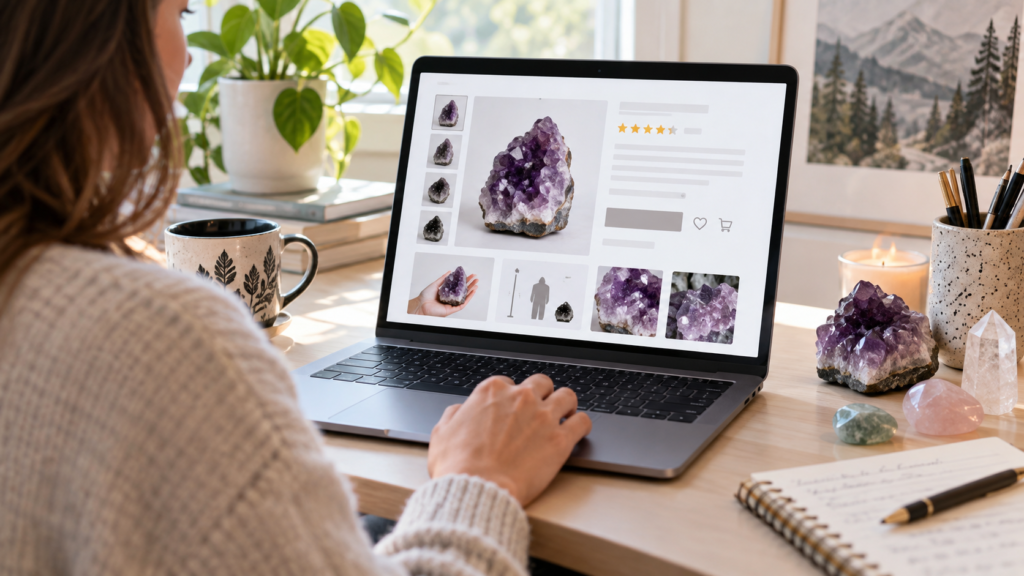
  Buying crystals online can be exciting, but it can also become confusing when every product listing uses different descriptions, photos, measurements, and marketing terms. A crystal listing may include phrases like: Natural crystal Premium quality Rare specimen AAA grade Authentic stone Energy crystal Collector piece High vibration But what do these descriptions actually mean? A beautiful photograph and an attractive product title are not always enough to understand what you are purchasing. The actual value of a crystal depends on details such as the mineral type, size, weight, condition, treatment, shape, craftsmanship, and how accurately the seller describes the product. Learning how to read a crystal product listing before you buy online helps you avoid common mistakes, compare products properly, and choose crystals that match your expectations. Whether you are purchasing your first crystal or expanding an existing collection, understanding product information is one of the most important buying skills. Why Crystal Product Listings Can Be Confusing Unlike manufactured products, crystals are natural materials. Every piece can have differences in: Color Pattern Shape Size Texture Inclusions Transparency Formation This means sellers need to provide more than just a product name. For example, two listings may both say: “Amethyst Crystal Tower” but one may be: 3 inches tall Lightweight Pale in color Mass-produced while another may be: 8 inches tall Deep purple Well formed A collector-quality specimen The product title alone does not tell the full story. The Most Important Things to Check in a Crystal Listing Check the Exact Crystal Name The first thing to confirm is what mineral you are actually buying. A good product listing should clearly mention: Mineral name Variety if applicable Whether it is natural or enhanced Any important treatments Avoid listings that only use vague terms such as: Energy stone Healing crystal Natural gem Spiritual stone without identifying the actual mineral. A clear listing should tell you whether you are buying: Amethyst Clear Quartz Rose Quartz Fluorite Labradorite Black Tourmaline Another specific mineral The mineral name is the foundation of every other buying decision. Understand Crystal Photos Before Purchasing Photos are one of the biggest factors influencing online crystal purchases. However, photographs can sometimes create unrealistic expectations. Product Photos May Not Show True Scale A close-up photograph can make a small crystal appear much larger than it actually is. Always check: Dimensions Weight Measurements Reference images if provided For example: A crystal tower photographed close to the camera may look like a large statement piece, but the actual height may only be a few inches. Check Whether You Receive the Exact Crystal Shown Crystal listings usually fall into two categories: Exact Piece Listing The photograph shows the exact crystal you will receive. This is common for: Large specimens Unique clusters Collector pieces Expensive crystals Representative Photo Listing The photograph represents the general style, but your piece may vary. This is common for: Tumbled stones Small crystals Crystal chips Bulk products Neither method is wrong, but the listing should make this clear. Always Check Crystal Measurements Measurements are one of the most overlooked parts of buying crystals online. A listing should ideally include: Height Width Depth Weight Depending on the product type, measurements can tell you whether the crystal will work for: A desk Shelf display Pocket carry Jewelry Meditation Collection storage Why Dimensions Matter Consider these examples: A crystal tower: 2 inches tall → desk-friendly 6 inches tall → statement shelf piece 10 inches tall → requires dedicated display space A sphere: Small diameter → easy tabletop decoration Large diameter → needs a stable stand Never judge size from photos alone. Understand Crystal Shapes and Forms The same mineral can be sold in many different forms. Common crystal forms include: Raw specimens Towers Spheres Clusters Tumbled stones Palm stones Freeforms Jewelry pieces Each form has different practical considerations. For example: A cluster may look impressive but require more careful handling. A tumbled stone may look simple but be easier to carry and use daily. If you are comparing different crystal forms, read: Crystal Towers, Spheres, Clusters & Tumbled Stones: Which Form Should You Buy? to understand how different shapes affect buying decisions. Pay Attention to Crystal Treatment Information A trustworthy listing should mention if a crystal has been treated. Possible treatments include: Dyeing Heat treatment Coating Stabilization Other enhancements Treatment does not automatically mean a crystal is fake. However, buyers should know what they are purchasing. For example: “Dyed natural quartz” and “Natural blue quartz” are not the same description. Transparency helps you make an informed decision. For more information about treatments, read: Dyed, Heat-Treated & Coated Crystals: What Buyers Should Know Before Purchasing Be Careful With Crystal Grading Terms Many crystal listings use terms like: AAA grade Premium grade High quality Museum quality Collector grade These terms can sound impressive, but they are not always standardized across sellers. One seller’s “AAA grade” may not mean the same thing as another seller’s. Instead of relying only on grades, look for specific details. Ask: Why is this crystal considered higher quality? Is the color better? Is the clarity better? Is the formation unusual? Is the condition superior? Specific explanations are more useful than marketing labels. Understand Crystal Price Descriptions A higher price does not automatically mean better quality. Crystal pricing can depend on: Size Weight Rarity Color Formation Origin Processing Craftsmanship Demand A small but exceptional specimen may cost more than a larger ordinary piece. Before purchasing an expensive crystal, compare: Similar sizes Similar forms Similar quality levels Similar mineral types For a deeper explanation of crystal pricing factors, read: Why Do Crystal Prices Vary So Much? A Buyer’s Guide to Quality, Size & Rarity Look for Natural Variation Natural crystals are not factory-produced items. Small differences are expected. Depending on the mineral, you may notice: Different shades Internal patterns Inclusions Cloudiness Surface variations Natural variation is not automatically a flaw. In fact, many collectors appreciate these differences because they make each specimen unique. Check the Seller Information A reliable crystal listing should provide

Dyed, Heat-Treated & Coated Crystals
Blog

Dyed, Heat-Treated & Coated Crystals: What Buyers Should Know Before Purchasing

    Buying crystals online can sometimes feel confusing. A crystal may look brighter, more colorful, or more unusual than expected, but many buyers do not realize that some stones can undergo treatments to enhance their appearance. Terms like dyed crystals, heat-treated crystals, coated crystals, and enhanced gemstones are often misunderstood. Some people assume any treated crystal is fake, while others assume every colorful crystal is completely natural. The reality is more balanced. A treated crystal is not automatically fake. Many natural gemstones are professionally enhanced to improve color, stability, or appearance. The important factor is transparency. Buyers should understand what they are purchasing and whether the seller clearly explains any treatments. This guide explains common crystal treatments, why they are used, how they affect appearance, and what you should check before buying crystals online. What Does “Treated Crystal” Mean? A treated crystal is a natural mineral that has been modified in some way after being mined. Treatments are commonly used to: Improve color Enhance appearance Increase stability Create specific finishes Make certain materials more suitable for jewelry or décor Treatment does not necessarily change the fact that the material is a genuine mineral. The important question is: Has the crystal been accurately described and represented? A natural crystal with a disclosed treatment is different from a product being marketed in a misleading way. Natural vs Treated Crystals: What Is the Difference? A natural crystal generally refers to material that has not undergone significant appearance-enhancing processes. A treated crystal may have experienced processes such as: Dyeing Heating Coating Stabilization Irradiation Impregnation The difference is not always visible to the average buyer. This is why purchasing from transparent sellers and reading product descriptions carefully is important. Dyed Crystals: What Are They? Dyed crystals are natural stones that have been infused with coloring agents to change or enhance their appearance. Dyeing is often used when: The original color is subtle A brighter appearance is desired A specific color style is popular The material naturally absorbs pigments Some dyed stones are created for decorative purposes, jewelry, or artistic designs. The concern is not that dyeing exists. The concern is when a dyed crystal is presented as naturally occurring in a way that could mislead buyers. How Can You Identify Dyed Crystals? Identifying dyed crystals visually can be difficult, especially for beginners. Possible signs include: Extremely bright unnatural colors Color concentrated around cracks or edges Similar-looking pieces with unusually intense shades Colors that do not match the typical appearance of the mineral Lack of treatment information However, appearance alone is not always enough. Some natural minerals naturally have vivid colors, while some treated stones can look very realistic. The safest approach is checking seller information rather than relying only on photographs. Why Are Some Crystals Dyed? Dyeing is usually performed for aesthetic reasons. Common reasons include: Creating More Vibrant Colors Some stones naturally have soft or muted tones. Dyeing can create stronger visual contrast. Producing Decorative Pieces Colorful crystal collections, carvings, and décor items may use dyed materials because they create a particular design style. Increasing Consumer Choice Some buyers prefer specific colors, and treatment allows manufacturers to offer more variety. Are Dyed Crystals Fake? No. A dyed crystal can still contain genuine natural mineral material. The issue is accurate labeling. For example: A seller describing a crystal as: “Dyed natural quartz” is different from: “Rare naturally occurring bright blue quartz” when the color was actually created through treatment. The material and the treatment should both be represented honestly. Heat-Treated Crystals Explained Heat treatment is another common enhancement method. It involves applying controlled heat to influence the appearance of certain minerals. Heat treatment may be used to: Improve color Intensify existing shades Create more desirable tones Modify appearance for jewelry purposes Heat treatment is common in the gemstone industry and does not automatically mean a stone is low quality. Why Are Crystals Heat Treated? Some minerals naturally respond to heat in ways that change their appearance. The goal is usually: Stronger color More consistent appearance Greater market appeal For some gemstones, heat treatment is a widely accepted industry practice. The important factor remains disclosure. Are Heat-Treated Crystals Less Valuable? Not always. Value depends on many factors: Mineral type Quality Color Size Clarity Rarity Demand Treatment type Some collectors specifically seek untreated specimens because they want the most natural example possible. Other buyers may prioritize appearance and affordability. The right choice depends on your personal preference and buying purpose. What Are Coated Crystals? Coated crystals have a thin layer added to their surface to create a different appearance. Common examples include: Metallic finishes Rainbow effects Iridescent coatings Colored surface treatments These coatings can create visually striking results. However, the coating is a surface enhancement rather than a natural feature of the mineral itself. Why Are Crystals Coated? Coatings are mainly used for: Decorative appeal Unique colors Jewelry designs Collectible aesthetics Many buyers enjoy coated crystals because they offer unusual visual effects. The important thing is knowing that the appearance comes from a surface treatment. Treated Crystals vs Fake Crystals These terms are often confused. Treated Crystal A real mineral that has been modified. Examples: Dyed quartz Heat-treated gemstones Coated minerals Fake Crystal A product made from a material that is not the advertised mineral. Examples: Colored glass sold as gemstone Synthetic material marketed as natural without disclosure Plastic imitation stones Treatment and imitation are different issues. A treated natural crystal can still be genuine. Why Seller Transparency Matters When buying crystals online, product descriptions should ideally include: Mineral name Treatment information Size Weight Origin when relevant Product photographs Care instructions A trustworthy seller does not need to hide treatments. Clear information helps buyers make better decisions. Questions to Ask Before Buying Treated Crystals Before purchasing, ask: Is the crystal naturally colored? If not, what treatment was used? Has the surface been coated? This matters especially for decorative crystals. Is the treatment permanent? Some treatments may wear away with: Scratches Chemicals Water exposure Repeated handling

Raw vs Polished Crystals
Blog

Raw vs Polished Crystals: Which Should You Buy and Why?

  When shopping for crystals, one of the first decisions you may face is raw vs polished crystals. Two pieces of the same mineral can look completely different depending on whether they are left close to their natural form or shaped and polished into a smooth finish. Raw crystals appeal to people who enjoy natural formations, unique textures, visible mineral structures, and collector-style specimens. Polished crystals are smoother, easier to handle, available in consistent shapes, and often more practical for pockets, jewelry, meditation, gifts, and everyday use. Neither option is automatically better. The right choice depends on what you are buying the crystal for, where you plan to keep it, how often you will handle it, your budget, and whether you value natural mineral character or a refined finish. Understanding these differences before purchasing can help you build a collection you will actually use and enjoy rather than simply buying whichever piece looks most impressive in a photograph. What Is a Raw Crystal? A raw crystal, sometimes described as rough or natural-form material, has not been extensively shaped and polished into a smooth decorative object. Depending on the mineral and how it was extracted or prepared, a raw piece may show: Uneven surfaces Natural crystal faces Matrix material Rough edges Inclusions Fractures Irregular shapes Natural variations in color Raw does not necessarily mean that a specimen came directly out of the ground and was sold completely untouched. A piece may have been cleaned, separated, trimmed, or otherwise prepared before sale. The important distinction is that its surface and overall appearance remain substantially more natural than those of a fully polished stone. What Is a Polished Crystal? A polished crystal has undergone physical processing to create a smoother surface or intentional shape. The process may involve cutting, grinding, sanding, and polishing. Polished crystals can be sold as: Tumbled stones Palm stones Spheres Hearts Cabochons Beads Freeforms Carvings Other decorative shapes Polishing changes the exterior appearance of the material, but it does not automatically mean that the underlying gemstone is synthetic. A genuine natural mineral can be cut and polished just like other gemstones. If authenticity is your primary concern, Crystal Dreams’ guide on How to Buy Authentic Healing Crystals is a better starting point for learning what to consider when evaluating the material itself. Raw vs Polished Crystals at a Glance Factor Raw Crystal Polished Crystal Appearance Natural and irregular Smooth and refined Shape Usually unpredictable Often standardized Texture Rough Smooth Handling Depends on specimen Usually easier Pocket Carry Often less practical Excellent Jewelry Limited without setting Excellent Display Strong natural character Refined decorative look Collecting Excellent Excellent Gifting Depends on recipient Usually easier Cleaning Can be more difficult Often simpler Price Varies widely Includes processing cost Uniqueness Often very high Still varies by material This comparison shows why the decision should be based on intended use rather than assuming one form is superior. Which Looks More Natural? Raw crystals generally preserve more of the mineral’s original visual character. Collectors may appreciate: Natural terminations Growth patterns Host rock or matrix Mineral associations Unusual formations Natural surface texture A raw Quartz cluster, for example, can reveal how individual points formed together. A polished Quartz freeform emphasizes transparency, internal features, and surface shine instead. Both can be visually interesting for completely different reasons. If you enjoy geology and natural formations, raw specimens may appeal to you more. If you prefer a clean, refined appearance that integrates easily into jewelry or interior décor, polished material may be more suitable. Does Polishing Make a Crystal Fake? No. This is one of the most important misconceptions to clear up. Polished does not mean synthetic. Natural gemstone material is routinely cut and polished. Likewise, a rough-looking object is not automatically genuine simply because it appears natural. Authenticity and surface finish are two different questions: Question 1: What material is this? Question 2: How has that material been shaped or finished? A natural crystal can be polished, while an imitation material can potentially be manufactured to look rough. When purchasing, evaluate the mineral identification separately from its form. For independent gemstone education, the Gemological Institute of America Gem Encyclopedia provides information about gemstones, their characteristics, and gemological properties. Which Is Better for Beginners? Polished stones are often easier for beginners to incorporate into daily routines. A tumbled stone or palm stone: Has smooth edges Is easy to hold Fits easily into a pouch Requires little display space Can be moved between rooms Is generally convenient for meditation Raw crystals can also be excellent first purchases, particularly for someone interested in mineral specimens and natural formations. The real question is what kind of experience the beginner wants. Choose Polished If You Want: Easy handling Pocket-sized stones Meditation stones Simple gifts Wearable crystals A cleaner decorative appearance Choose Raw If You Want: Natural mineral formations Unique specimens Collector appeal Organic décor Visible crystal structure Less standardized pieces Which Is Better for Handling? Polished crystals generally have an advantage if you plan to handle the stone frequently. Smooth tumbled and palm stones are comfortable to hold during: Meditation Journaling Reflection Intention-setting Relaxation routines Raw specimens can contain sharp edges, delicate points, fragile formations, or uneven surfaces. That doesn’t make them unsuitable for handling, but you should inspect the individual piece before deciding how frequently to pick it up. A large raw cluster may be better treated as a display specimen than as something you repeatedly carry around. Which Is Better for Carrying in a Pocket? For most people, polished wins this category. A tumbled stone is specifically well suited to: Pockets Handbags Backpacks Small pouches Raw pieces can scratch other objects, damage fabric, break at delicate points, or simply feel uncomfortable. If your intention is to keep a crystal with you regularly, prioritize size, smoothness, and physical durability rather than purchasing the most visually dramatic specimen. Raw vs Polished for Crystal Jewelry Polished crystals are generally much more practical for jewelry. Gemstone jewelry frequently uses: Polished beads Cabochons Faceted gemstones

Best Crystal Gifts for Birthdays
Blog

Best Crystal Gifts for Birthdays, Housewarmings, and Spiritual Beginner

  The best crystal gifts feel personal without requiring the recipient to already be an expert in crystal healing. For birthdays, stones connected with confidence, love, abundance, or personal growth can make thoughtful choices. Housewarming gifts often focus on positive home energy, protection, and harmony, while spiritual beginners usually benefit from versatile stones such as Clear Quartz, Amethyst, Rose Quartz, or Black Tourmaline. The key is to match the crystal with the person and occasion rather than simply choosing the most expensive or visually dramatic stone. Why Crystals Make Meaningful Gifts A crystal gift can combine three things: Beauty Symbolism Personal intention Unlike a generic decorative item, a thoughtfully selected crystal can represent a quality you wish for someone. Examples include: Rose Quartz for compassion Citrine for new opportunities Amethyst for calm Black Tourmaline for grounding Clear Quartz for clarity Green Aventurine for growth For someone completely new to crystals, you can begin with our guide on How to Choose the Right Crystal for Your Energy to understand how intentions can guide crystal selection. Crystal Gifts by Occasion Occasion Crystal Ideas Meaning Birthday Citrine, Carnelian Confidence and positive growth Housewarming Clear Quartz, Black Tourmaline Clarity and grounding Romantic Gift Rose Quartz Love and compassion New Job Pyrite, Tiger’s Eye Ambition and confidence Spiritual Beginner Amethyst, Clear Quartz Versatility and reflection New Chapter Green Aventurine Growth and opportunity Birthday Crystal Gifts Birthdays often represent a new personal cycle, making crystals connected with confidence, creativity, and personal growth especially appropriate. Citrine Citrine is traditionally associated with: Optimism Confidence Abundance Personal success It is a particularly thoughtful birthday gift for someone beginning a new business, career, or creative project. Carnelian Carnelian is traditionally linked with: Motivation Courage Creativity Action It can work well for someone who is beginning something new or wants to feel more confident taking the next step. Crystal Gifts for Housewarmings A housewarming crystal gift can be both decorative and symbolic. Good choices include: Clear Quartz Clear Quartz is versatile and suitable for: Living rooms Entry areas Meditation spaces Home offices Black Tourmaline Black Tourmaline is commonly associated with grounding and protection, which makes it a popular choice for entryways. Rose Quartz Rose Quartz works well in shared spaces because of its traditional associations with love, compassion, and harmony. If you’re selecting stones specifically for a new home, read Best Crystals for Positive Energy at Home for room-by-room ideas. Gifts for Spiritual Beginners Someone exploring crystals for the first time usually doesn’t need rare specimens. Begin with accessible stones whose traditional meanings are easy to understand. A beginner-friendly selection might contain: Clear Quartz Amethyst Rose Quartz Black Tourmaline Citrine These cover a wide range of intentions without making the experience overwhelming. Our guide to Best Crystal Starter Kits for Beginners provides a useful starting point if you prefer gifting several complementary stones rather than one crystal. Crystal Jewelry as a Gift Crystal jewelry is ideal when you want the gift to feel wearable and personal. Popular choices include: Bracelets Pendants Necklaces Earrings Rings A bracelet may be particularly useful for beginners because it lets the wearer keep the crystal close throughout the day. If you’re comparing jewelry options online, our guide on Where to Buy Genuine Crystal Bracelets Online explains what to consider when evaluating authenticity, quality, sizing, and seller transparency. Match the Crystal to the Recipient Instead of asking, “What crystal looks prettiest?” ask: What would I like this gift to symbolize? Recipient Crystal Idea Someone starting over Green Aventurine A stressed friend Amethyst Romantic partner Rose Quartz New entrepreneur Citrine or Pyrite Someone needing confidence Tiger’s Eye Spiritual beginner Clear Quartz This gives the gift a more personal story. Crystal Gifts by Budget Meaningful does not have to mean expensive. Smaller Budget Consider: Tumbled stones Small bracelets Pocket crystals Mini crystal sets Mid-Range Consider: Crystal towers Quality jewelry Curated gift boxes Polished specimens Premium Consider: Large statement pieces High-quality jewelry Decorative clusters Carefully curated collections When affordability matters, Affordable Healing Crystals You Can Buy Online offers additional guidance on building a meaningful collection without overspending. Avoid These Gift-Buying Mistakes Do not choose a crystal simply because: It is expensive. It is trending. It has the boldest healing claim. The seller says it guarantees a particular result. Instead, focus on: Authenticity Meaning Quality Recipient preferences Practical use Crystals can be thoughtful symbolic gifts, but they should not be marketed as guaranteed treatments or solutions. Add Meaning to the Gift A simple note can make the crystal much more personal. For example: “I chose this Citrine for you because it represents confidence, optimism, and new opportunities.” That explanation helps even a complete beginner understand why the gift was chosen. Caring for a Gift Crystal Include basic care advice where useful. Different minerals have different hardness levels and reactions to: Water Sunlight Chemicals Physical impact For objective information about gemstone properties and care, the International Gem Society Gemstone Guide is a helpful external reference. Conclusion The best crystal gifts are chosen with the recipient in mind. Citrine and Carnelian can suit birthdays and new beginnings, Clear Quartz and Black Tourmaline make meaningful housewarming choices, Rose Quartz adds a loving touch, and versatile stones like Amethyst or Clear Quartz are excellent introductions for spiritual beginners. Explore Crystal Dreams for crystal education, metaphysical guidance, and inspiration when choosing a meaningful gift. The right crystal does not need to be extravagant; it simply needs to reflect an intention that feels genuine. Frequently Asked Questions What is the best crystal gift for a beginner? Clear Quartz, Amethyst, Rose Quartz, and Black Tourmaline are all approachable beginner options. What crystal makes a good housewarming gift? Clear Quartz, Black Tourmaline, Rose Quartz, and Green Aventurine are popular symbolic choices. Is crystal jewelry a good birthday gift? Yes, particularly when the stone’s meaning matches the recipient’s personality or current goals. How many crystals should I give as a gift? One meaningful crystal can be enough. Alternatively, a small complementary set works well for beginners. Should I explain

Why Do Crystal Prices Vary So Much
Blog

Why Do Crystal Prices Vary So Much? A Buyer’s Guide to Quality, Size & Rarity

    If you have ever compared crystals online or in a metaphysical shop, you may have noticed something confusing: two crystals with the same mineral name can have completely different prices. One piece may cost only a few dollars, while another that appears similar at first glance may cost significantly more. So, why do crystal prices vary so much? There is no single factor that determines what a crystal should cost. Price can be influenced by the mineral itself, rarity, size, weight, color, clarity, formation, specimen condition, origin, treatments, cutting and polishing, craftsmanship, and even how desirable a particular piece is to collectors. This means that a larger crystal is not automatically more valuable, a more expensive crystal is not automatically better, and a low-priced crystal is not automatically fake. Understanding what actually affects crystal pricing can help you compare products more intelligently and avoid paying a premium simply because a seller uses words such as “rare,” “premium,” or “high vibration.” If authenticity is your first concern, Crystal Dreams’ guide on How to Buy Authentic Healing Crystals is a useful companion to this article. Authenticity tells you what the material is. This guide focuses on a different question: what makes one genuine crystal worth more or less than another? There Is No Universal Price for a Crystal Crystals are natural materials, not standardized factory products. Two specimens of the same mineral can differ in: Size Weight Color Clarity Crystal formation Inclusions Damage Origin Rarity Treatments Shape Processing Overall appearance That is why comparing crystals only by their mineral name can be misleading. A small, well-formed specimen may sometimes be more desirable than a much larger piece with poor formation or significant damage. Similarly, a polished piece with exceptional color or pattern may command a higher price than another piece of the same size. What Factors Affect Crystal Prices? Pricing Factor Why It Matters Rarity Scarcer material may be harder to source Size & Weight Larger specimens use more material Color Desirable saturation or unusual color can affect demand Clarity Transparency can matter for certain minerals Formation Well-formed natural crystals can attract collectors Condition Chips and damage may reduce specimen value Origin Some localities are especially collectible Treatments Enhancement can change appearance and value Processing Cutting and polishing add labor Craftsmanship Carvings and jewelry require additional work Demand Popular minerals may experience stronger market demand The importance of each factor varies by mineral. There is no formula where every crystal gains value in exactly the same way. Rarity Can Have a Major Effect on Price One of the most obvious pricing factors is availability. Some minerals are relatively abundant and widely available. Others occur in fewer locations, limited deposits, unusual formations, or smaller quantities. However, buyers should be careful with the word “rare.” In crystal marketing, “rare” can sometimes be used loosely to make an ordinary product sound more exclusive. Before paying a large premium for supposedly rare material, ask: Is the mineral itself actually uncommon? Is this particular variety rare? Is the formation unusual? Is the locality important? Is the seller explaining what makes it rare? A description that simply says “extremely rare crystal” without explaining why should not be enough to justify a high price. Size Matters, But Bigger Does Not Always Mean Better Larger crystals often cost more because they contain more material and can be harder to source, transport, and display. But size is only one factor. Imagine two specimens: Crystal A: Large, cloudy, damaged, common formation. Crystal B: Smaller, exceptionally well formed, attractive color, minimal damage. A collector may prefer Crystal B despite its smaller size. When comparing price, look at size alongside: Quality Formation Condition Rarity Visual appeal This is especially important when shopping online, where close-up photography can make a small specimen look much larger than it really is. Always check dimensions. Weight Can Be More Useful Than Photographs For larger crystals, sellers may provide weight in: Grams Ounces Pounds Kilograms Weight can give you additional context when comparing two specimens. However, weight alone still does not establish value. Different minerals have different densities, and two similarly sized crystals can weigh differently. Use weight as one comparison point rather than the entire pricing formula. Color Can Change a Crystal’s Value Color can have a significant impact on the desirability of certain gemstones and minerals. Buyers may value: Strong saturation Attractive zoning Consistency Unusual natural colors Visually distinctive patterns But the ideal color depends on the mineral. A deeper color does not automatically mean every crystal is better. Also remember that online photography can affect how color appears. Lighting, editing, screen settings, and background color can all influence perception. When a crystal’s color is a major reason for its price, look for: Multiple photographs Different viewing angles Neutral lighting where possible Treatment disclosure Realistic descriptions Does Crystal Clarity Affect Price? For some materials, clarity can strongly influence desirability. A highly transparent piece may be more valuable than a cloudy piece of comparable material. However, clarity is not universally desirable. Some crystals are valued specifically because of: Inclusions Internal patterns Rutile Phantoms Color zoning Other natural features This is why gemstone pricing cannot be reduced to: clear = expensive cloudy = cheap The mineral and type of specimen matter. For independent information about gemstone characteristics, the Gemological Institute of America Gem Encyclopedia is a useful reference when researching the physical and gemological properties of specific materials. Natural Crystal Formation Can Affect Value Raw specimens are often evaluated partly by how the crystals formed. Collectors may look for: Complete terminations Distinct crystal faces Interesting clusters Balanced formations Unusual growth habits Attractive matrix Multiple minerals occurring together A specimen with a visually impressive natural formation may be more desirable than an ordinary piece of the same mineral. This is one reason raw crystal pricing can appear inconsistent if you compare pieces only by weight. You are sometimes paying for the formation, not simply the amount of material. Damage and Condition Matter Natural crystals can have fractures,

Crystal Towers, Spheres, Clusters & Tumbled Stones
Blog

Crystal Towers, Spheres, Clusters & Tumbled Stones: Which Form Should You Buy?

  When shopping for crystals, choosing the mineral is only half the decision. The same crystal can appear as a tower, sphere, cluster, tumbled stone, palm stone, freeform, or raw specimen, and each form offers a very different buying experience. A large crystal sphere may look impressive online but require a secure stand and plenty of display space. A tower fits neatly on a desk or shelf but needs a stable base. A natural cluster can become a striking collector piece while also being more fragile and difficult to clean. A tumbled stone may have less visual impact, yet it is affordable, portable, easy to handle, and practical for someone buying their first crystal. So when comparing crystal towers vs spheres vs clusters, there is no single form that is best for everyone. The right choice depends on where you will keep the crystal, how often you will handle it, how much space you have, your budget, whether you want to carry it, and how much maintenance you are comfortable with. This guide focuses on those practical differences so you can choose a crystal form that fits the way you actually plan to use it. Why Does Crystal Form Matter? Crystal form affects much more than appearance. It can influence: Price Weight Display requirements Portability Handling comfort Fragility Storage Cleaning Amount of processing Suitability for gifting For example, a tumbled Amethyst and an Amethyst sphere may originate from the same type of mineral material, but they are very different products. One can fit in your pocket. The other may function primarily as a decorative display piece. That is why you should decide what you want from the crystal before deciding which shape looks best. Crystal Forms at a Glance Crystal Form Best For Space Needed Portability Typical Buying Consideration Tumbled Stone Beginners, carrying Very Low Excellent Size and finish Palm Stone Handling, meditation Low Very Good Comfort and weight Tower Desk, shelf, display Moderate Low Base stability Sphere Decorative display Moderate Low Stand and rolling risk Cluster Collecting, statement display Medium–High Poor Fragility and condition Raw Specimen Collecting, natural appearance Varies Varies Formation and condition Freeform Décor, display Moderate Low Stability and polish This comparison is a better starting point than assuming one shape is inherently more desirable. What Is a Crystal Tower? A crystal tower is a shaped piece with a vertical body, pointed top, and usually a flat base. Towers may be made from: Quartz varieties Fluorite Jasper Agate Calcite Labradorite Other materials suitable for shaping Because towers are cut and polished, their final appearance depends partly on craftsmanship. Why Buy a Crystal Tower? Crystal towers are especially practical when you want a piece that: Has noticeable vertical presence Fits on a desk Uses less horizontal space Works on a shelf Displays internal patterns clearly Looks refined and intentional A tower can provide greater visual impact than a tumbled stone without requiring as much surface area as a large cluster. What Should You Check Before Buying a Tower? Do not judge a tower from the front photograph alone. Check: Height Width Weight Base Surface finish Chips Point condition Internal fractures Overall stability The base is particularly important. A tall, narrow tower with an uneven base may look impressive but become frustrating if it tips over easily. If the seller provides dimensions, consider both height and width, not height alone. Are Taller Crystal Towers Better? Not automatically. A taller tower can have more visual presence, but it may also: Cost more Weigh more Require additional clearance Be easier to knock over Need a deeper shelf For a small desk, a compact tower may be the smarter purchase. For a dedicated display shelf, a larger tower might make sense. Buy according to your space rather than assuming height equals quality. What Is a Crystal Sphere? A crystal sphere is shaped and polished into a rounded form. Spheres can be particularly attractive because polishing may reveal: Internal patterns Banding Color variation Inclusions Optical effects They also look visually different depending on viewing angle. Why Buy a Crystal Sphere? A sphere works particularly well as: A decorative centerpiece Shelf décor A collector piece A meditation-room object A gift Unlike a tower, a sphere does not have one obvious “front.” That can make it attractive for open shelving or displays that are visible from several directions. Crystal Spheres Need a Stand This sounds obvious, but it is an important buying consideration. A polished sphere can roll. Before buying one, check whether: A stand is included You need to purchase a stand separately The stand can support the sphere’s weight The display surface is level The sphere will be protected from falling Never assume a heavy sphere is safe simply because it feels substantial. A fall can damage: The sphere Furniture Flooring Nearby objects For larger spheres, display stability should be part of the purchase decision. Does Sphere Size Matter? Yes. A small sphere can work on: A desk Small shelf Bedside table A large sphere may require: A substantial stand Strong shelving More surface area Greater distance from edges Check actual diameter rather than relying on close-up photographs. What Is a Crystal Cluster? A cluster is a natural formation in which multiple crystal points or crystals occur together. Unlike towers and spheres, clusters are generally appreciated for their natural structure rather than a standardized shape. A cluster may show: Multiple terminations Different crystal sizes Matrix material Natural growth patterns Mineral combinations Irregular surfaces This makes clusters especially appealing to people who enjoy crystals as natural specimens. Why Buy a Crystal Cluster? Clusters work particularly well for: Collector displays Large shelves Living-room décor Dedicated crystal cabinets Natural interior styling Each cluster can be highly individual. Even two specimens from the same mineral deposit may have very different shapes and formations. Clusters Require More Care The same natural features that make clusters visually interesting can make them less practical. They may contain: Thin points Fragile terminations Narrow spaces Matrix Sharp surfaces Difficult-to-clean crevices A

Clean and Charge Your Crystals
Blog

How to Cleanse and Charge Your Crystals the Right Way: 7 Safe & Effective Methods

Knowing how to cleanse and charge your crystals is one of the most important parts of building a meaningful crystal practice. Many crystal enthusiasts believe that healing crystals interact with surrounding energy through meditation, manifestation, emotional healing, and everyday use. Because of this, crystals are traditionally cleansed and recharged to symbolically refresh their energy before being used again. Whether you’ve just purchased your first crystal or already have an expanding collection, understanding proper crystal care can help you create intentional rituals that support mindfulness and spiritual growth. While there is no scientific evidence proving that crystals absorb or store energy, many people find that cleansing and charging rituals encourage consistency, gratitude, and a deeper connection with their personal intentions. If you’re new to crystal healing, we recommend learning How to Buy Authentic Healing Crystals before building your collection. Choosing genuine stones helps you better understand their natural beauty, mineral properties, and traditional metaphysical associations. Why Do Healing Crystals Need Cleansing? Many practitioners believe that healing crystals interact with the energy around them. During meditation, emotional healing, or manifestation work, crystals are thought to become part of your personal spiritual practice. Because of this, many people cleanse their crystals to symbolically: Remove stagnant energy Prepare for new intentions Refresh spiritual practices Support meditation rituals Create a mindful connection with each crystal At Crystal Dreams, cleansing is viewed as a personal ritual rather than a scientific process. It allows you to pause, reflect, and reconnect with your goals before working with your crystals again. Cleansing vs. Charging: What’s the Difference? Many beginners assume these two practices are the same, but they serve different purposes. Practice Purpose Cleansing Symbolically clears accumulated or stagnant energy. Charging Symbolically restores and energizes the crystal with fresh intention. Most practitioners cleanse their crystals first and then charge them afterward. When Should You Cleanse Your Crystals? There isn’t a universal schedule because crystal practices vary from person to person. Many people choose to cleanse crystals: After purchasing a new crystal After intense emotional experiences After meditation sessions Before setting a new intention During the Full Moon Once every month Whenever the crystal feels energetically “heavy” Creating a regular cleansing routine often becomes part of a broader mindfulness practice. If your crystal collection includes stones traditionally associated with emotional healing, you may also enjoy reading our guide on Best Healing Crystals for Anxiety and Stress, where we explore how different crystals are commonly used alongside meditation and relaxation techniques. 7 Safe Ways to Cleanse and Charge Your Crystals 1. Moonlight Cleansing Moonlight is one of the oldest and most popular methods of cleansing and charging healing crystals. Many practitioners leave their crystals on a windowsill, balcony, or protected outdoor space overnight so they can symbolically absorb the gentle light of the moon. Full Moon rituals are especially popular because they represent renewal and fresh beginnings. Best Crystals for Moonlight Amethyst Clear Quartz Rose Quartz Citrine Fluorite Black Tourmaline Benefits Beginner friendly No special equipment required Gentle on most crystals Suitable for large collections Moonlight cleansing also encourages people to slow down and intentionally reconnect with their spiritual practice each month. 2. Cleansing with Selenite Selenite is one of the most commonly used crystals for cleansing other stones. Rather than placing crystals in water or burying them underground, many practitioners simply place them on a Selenite charging plate or beside a Selenite wand for several hours. Why People Choose Selenite Quick and simple No water required Popular for beginners Suitable for everyday crystal care Ideal for crystal collections Because Selenite is itself considered delicate, it should be kept dry and handled carefully. 3. Sound Cleansing Sound has been used in spiritual traditions for centuries. Many people use vibrations produced by singing bowls, tuning forks, bells, or chimes to symbolically refresh the energy of their crystals. Sound cleansing is especially useful because multiple crystals can be cleansed at the same time. Common sound tools include: Tibetan singing bowls Crystal singing bowls Meditation bells Tuning forks Wind chimes Many practitioners combine sound cleansing with meditation to create a peaceful environment before beginning their crystal work. 4. Smoke Cleansing Smoke cleansing is another traditional method that has been practiced in various cultures. People often pass crystals slowly through the smoke of: Incense Sustainably sourced Palo Santo Ethically sourced herbs (used respectfully within their cultural contexts) While doing this, many practitioners focus on a positive affirmation or intention, such as: “May this crystal support clarity, peace, and positive energy.” Smoke cleansing is commonly paired with meditation, journaling, or intention-setting rituals. 5. Visualization and Intention One of the simplest methods requires no tools at all. Hold the crystal in your hands. Close your eyes. Imagine a bright white light surrounding the crystal while focusing on gratitude and your desired intention. Many people appreciate this technique because it can be practiced anywhere and encourages mindfulness regardless of experience level. 6. Earth Cleansing Earth cleansing is one of the oldest crystal care practices and is based on the idea of reconnecting a crystal with the natural environment from which it formed. Some practitioners gently bury their crystals in clean soil for several hours or overnight, believing this symbolizes releasing stagnant energy and restoring balance. This method is often reserved for durable crystals rather than delicate minerals. Crystals Commonly Used for Earth Cleansing Black Tourmaline Smoky Quartz Clear Quartz Jasper Tiger’s Eye Avoid burying soft, fragile, or water-soluble crystals because moisture and minerals in the soil may damage their surface. 7. Charging Crystals with Clear Quartz Clear Quartz is often called the Master Healer because it is traditionally believed to amplify intentions and complement other crystals. Many practitioners place smaller crystals around a Clear Quartz point or cluster while setting a new intention. Although this is a symbolic spiritual practice rather than a scientifically proven process, many crystal enthusiasts include Clear Quartz in their monthly crystal care routine. Charging with Clear Quartz is popular because it is: Simple Beginner friendly Suitable for most crystal collections Easy to

Right Crystal for Your Energy
Blog

How to Choose the Right Crystal for Your Energy: A Complete Beginner’s Guide

Learning how to choose the right crystal for your energy can make your crystal practice more personal, meaningful, and aligned with your intentions. With so many healing crystals available, beginners often feel unsure about where to start or which stone is truly right for them. The best crystal for you is not always the rarest, most expensive, or most visually beautiful one. Instead, it is the crystal that supports your current emotional needs, spiritual goals, lifestyle, and intuitive connection. Whether you are seeking protection, calmness, love, abundance, focus, confidence, or spiritual clarity, choosing the right crystal begins with understanding your intention. Crystals are not a replacement for medical or mental health care, but many people use them as mindful tools for meditation, reflection, spiritual wellness, and daily self-awareness. If you are just beginning your crystal journey, it is helpful to first understand How to Buy Authentic Healing Crystals so you can confidently recognize genuine stones before building your collection. Why Choosing the Right Crystal Matters Choosing a crystal with intention helps you create a stronger connection with your spiritual practice. Instead of randomly collecting stones, you begin selecting crystals based on the purpose they may serve in your life. A thoughtful crystal selection can support: Emotional awareness Mindfulness Meditation Intention setting Spiritual growth Daily grounding Positive habits Personal reflection For example, someone dealing with emotional stress may feel drawn toward Amethyst or Rose Quartz, while someone seeking productivity may prefer Fluorite, Carnelian, or Clear Quartz. If stress or emotional overwhelm is your main concern, our guide on Best Healing Crystals for Anxiety and Stress explores calming stones that many practitioners use for relaxation and emotional balance. Step 1: Choose a Crystal Based on Your Intention The easiest way to choose the right crystal is to ask: “What do I want support with right now?” Your intention becomes the foundation of your crystal choice. Intention Recommended Crystals Protection Black Tourmaline, Obsidian, Smoky Quartz Love Rose Quartz, Rhodonite, Green Aventurine Focus Fluorite, Clear Quartz, Sodalite Abundance Citrine, Pyrite, Green Aventurine Motivation Carnelian, Tiger’s Eye, Sunstone Calm Energy Amethyst, Lepidolite, Selenite Confidence Tiger’s Eye, Citrine, Carnelian Spiritual Growth Amethyst, Labradorite, Clear Quartz When your intention is clear, your crystal choice becomes easier and more meaningful. Step 2: Choose a Crystal by Emotional Need Your emotions can guide you toward the right crystal. Many people choose crystals during life transitions, stressful periods, or moments of personal growth. If  You Need Calm and Peace Choose: Amethyst Selenite Lepidolite Blue Lace Agate These crystals are traditionally associated with relaxation, stillness, and emotional balance. If  You Need Love and Compassion Choose: Rose Quartz Rhodonite Green Aventurine Rose Quartz is especially popular for self-love and heart-centered healing. If  You Need Strength and Confidence Choose: Tiger’s Eye Citrine Carnelian These stones are often used when people want to take action, speak up, or move forward with courage. If  You Need Protection Choose: Black Tourmaline Obsidian Smoky Quartz Hematite If protection is your main intention, you may also want to read Best Protection Crystals for Negative Energy, where we compare stones traditionally associated with grounding and energetic boundaries. Step 3: Choose a Crystal by Chakra Many crystal practitioners choose stones based on chakra associations. Chakras are energy centers commonly discussed in yoga, meditation, and spiritual wellness traditions. Chakra Theme Crystal Examples Root Chakra Grounding, stability Black Tourmaline, Hematite, Smoky Quartz Sacral Chakra Creativity, passion Carnelian, Orange Calcite, Sunstone Solar Plexus Chakra Confidence, power Citrine, Tiger’s Eye, Pyrite Heart Chakra Love, compassion Rose Quartz, Green Aventurine, Rhodonite Throat Chakra Communication Blue Lace Agate, Sodalite, Aquamarine Third Eye Chakra Intuition, clarity Amethyst, Fluorite, Labradorite Crown Chakra Spiritual connection Clear Quartz, Selenite, Amethyst Choosing crystals by chakra can be helpful if you already practice meditation, yoga, Reiki, or energy work. Step 4: Choose a Crystal by Lifestyle The right crystal should fit your daily life. For example: Students may benefit from Fluorite or Sodalite. Entrepreneurs may choose Citrine or Pyrite. Sensitive people may prefer Black Tourmaline or Labradorite. People working on self-love may choose Rose Quartz. Remote workers may enjoy Clear Quartz or Fluorite near their desk. If your goal is productivity, our blog on Best Crystals for Focus and Motivation explains which crystals are traditionally associated with concentration, discipline, and creative momentum. Step 5: Trust Your Intuition Sometimes, the crystal you need is simply the one you feel drawn to. You might notice: A certain color catches your eye. You keep thinking about one stone. You feel calm when holding a crystal. A crystal feels meaningful even before you know its properties. Many practitioners believe intuition plays an important role in crystal selection. Research can guide you, but your personal connection also matters. Step 6: Start with Beginner-Friendly Crystals If you are new, start simple. A strong beginner collection may include: Crystal Why It’s Beginner-Friendly Clear Quartz Versatile and easy to pair Amethyst Calming and widely loved Rose Quartz Gentle emotional support Black Tourmaline Popular for grounding Citrine Associated with positivity Selenite Commonly used for cleansing You do not need a large collection to begin. A few meaningful crystals are better than many random stones. If budget matters, explore Affordable Healing Crystals You Can Buy Online to find beginner-friendly stones without overspending. Step 7: Learn the Meaning Before You Use It Before working with a crystal, take time to learn: Its traditional meaning Common uses Physical care needs Whether it is water-safe Best placement or usage method For example, Selenite should generally be kept away from water because it is soft and can become damaged. Pyrite can oxidize with moisture. Understanding the physical properties of crystals helps protect your collection. For gemstone education and mineral information, the International Gem Society Crystal Guide is a helpful external resource for learning more about crystal formation, hardness, and identification. Common Mistakes When Choosing Crystals Avoid these beginner mistakes: Buying only based on appearance Choosing too many crystals at once Ignoring your intention Not researching authenticity Forgetting crystal care needs Expecting crystals to solve everything

Scroll to Top
Verified by MonsterInsights